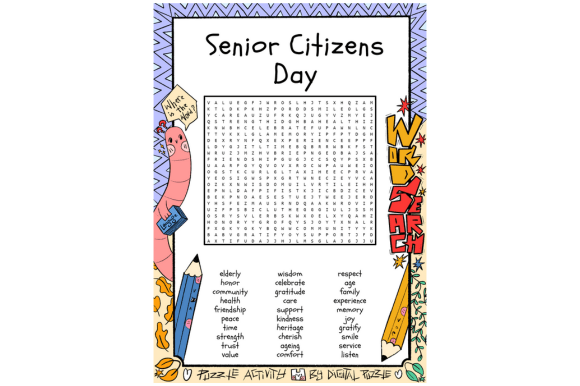
Senior Citizens Day Word Search Puzzle
In the landscape of modern education and community engagement, few tools offer as much versatility as a well-crafted word search. The Senior Citizens Day Word Search Puzzle is more than a simple grid of letters; it is a bridge connecting generations through language, history, and shared values. For educators, event planners, and content creators, this resource provides a unique opportunity to blend entertainment with meaningful instruction. By immersing students or participants in a vibrant learning experience, you transform a standard worksheet into a catalyst for conversation about respect, aging, and the contributions of older adults.
The Educational Value of Themed Puzzles
At its core, a word search is a cognitive exercise that sharpens pattern recognition and vocabulary retention. However, when themed around a specific occasion like Senior Citizens Day, the activity gains emotional and social depth. This puzzle is designed to enrich vocabulary while subtly encouraging respect for the elderly. Instead of passive listening, participants actively engage with terms related to wisdom, heritage, family roles, and historical milestones.
For kids of all age brackets, the challenge level can be adjusted without losing the thematic integrity. Younger children might focus on identifying words like "grandparent," "story," or "kindness," while older students can tackle more complex concepts such as "legacy," "mentorship," or "longevity." This adaptability makes the Senior Citizens Day Word Search Puzzle a robust tool in a teacher's arsenal. It moves beyond rote memorization, aiming to spark curiosity about the lives and experiences of senior citizens in a way that feels organic and fun.
Integrating Respectful Dialogue
The true power of this resource lies in its ability to facilitate dialogue. Once the puzzle is completed, the real learning begins. Educators can use the found words as prompts for discussion. For example, finding the word "wisdom" can lead to a class discussion on how seniors contribute their knowledge to families and communities. This approach ensures that the activity is not just a filler for time but a structured method for character education. It aligns perfectly with everyday classroom routines while adding a layer of significance during special occasions.
Creative Applications Across Different Audiences
While the primary audience for this worksheet is often school-aged children, the application extends far beyond the traditional classroom. Adults aged 20–50, including creators, designers, and small business owners, can adapt this concept for various professional and personal goals. The key is understanding the underlying message: honoring the past while engaging the present.
- Community Centers and Libraries: Local organizations can host intergenerational events where seniors and youth solve the puzzle together. This fosters connection and allows elders to share stories related to the words they find.
- Corporate Training: Businesses focusing on diversity and inclusion can use a modified version to highlight the value of experienced employees. It serves as an icebreaker that emphasizes mentorship and institutional memory.
- Family Engagement: Parents and caregivers can use the puzzle at home to start conversations with grandchildren about their grandparents' lives, creating a tangible link between generations.
Adapting for Digital Platforms
In today's digital-first environment, the Senior Citizens Day Word Search Puzzle can be transformed from a static PDF into an interactive web element. Bloggers and publishers can embed these puzzles within articles about aging, retirement planning, or family history. This keeps users on the page longer and adds an element of gamification to informational content. Designers can create animated versions where finding a word reveals a short quote or fact about a famous senior citizen, enhancing the educational impact.
Freelancers offering educational resources can also package these puzzles as part of a larger curriculum kit. By combining the word search with writing prompts, art projects, or interview guides, they create a comprehensive learning module. This strategy appeals to homeschooling parents and private tutors looking for high-quality, ready-to-use materials that address both literacy and social-emotional learning.
Design Strategies for Maximum Impact
To ensure the puzzle remains effective and audience-friendly, attention must be paid to design and content curation. A cluttered grid or confusing font can frustrate users, particularly those with visual impairments. Clarity is paramount. When creating or selecting a Senior Citizens Day Word Search Puzzle, prioritize legible fonts and sufficient spacing between letters. High contrast between the text and background is essential for accessibility, ensuring that everyone, regardless of age or ability, can participate.
Curating the Word List
The selection of words defines the tone and educational value of the activity. Avoid generic terms that lack depth. Instead, curate a list that reflects the multifaceted nature of senior life. Include words that celebrate achievements, such as "inventor," "author," or "volunteer," alongside relational terms like "ancestor," "guide," and "friend." This variety prevents stereotypes and presents a holistic view of aging.
Consider the difficulty curve. For mixed-age groups, provide a tiered approach where some words are hidden horizontally and others diagonally or backwards. This differentiation allows advanced solvers to stay challenged while beginners build confidence. Consistency in the theme is also crucial; every word should reinforce the central message of respect and appreciation.
Practical Implementation Tips
Bringing a whiff of uniqueness to your teaching strategy or event planning requires thoughtful execution. Here are practical recommendations for integrating this puzzle into your workflow:
- Set the Context: Before handing out the worksheets, briefly explain the significance of Senior Citizens Day. Share a story or statistic about the elderly population to frame the activity.
- Encourage Collaboration: Allow participants to work in pairs or small groups. This promotes peer learning and helps shy individuals feel more comfortable sharing ideas.
- Extend the Activity: Don't stop at the puzzle. Ask participants to write a sentence using three of the words they found, or draw an illustration representing one of the concepts.
- Gather Feedback: After the session, ask what words were most interesting or surprising. This feedback can inform future iterations of the project.
For entrepreneurs and marketers, this puzzle can serve as a valuable lead magnet. Offering a free, downloadable version in exchange for an email address builds a community interested in family values and education. Ensure the download is optimized for mobile devices, as many users will access it via smartphones or tablets. A seamless user experience reinforces the quality of your brand and encourages further engagement.
Measuring Success
Success with the Senior Citizens Day Word Search Puzzle isn't just about how quickly it is solved. It is measured by the engagement it generates and the conversations it sparks. Did the activity make participants think differently about the elderly? Did it help them learn new vocabulary? Did it bring people together? These qualitative metrics are often more important than quantitative ones. By focusing on the human element, you ensure that the resource remains relevant and impactful year after year.
Ultimately, this fusion of entertainment and education offers a brilliant tool for anyone looking to enhance learning and foster connection. Whether used in a bustling classroom, a quiet library corner, or a corporate training room, the Senior Citizens Day Word Search Puzzle stands as a testament to the power of simple, well-designed activities to create lasting impressions. It invites us to pause, reflect, and honor the generation that paved the way, all while having a bit of fun.