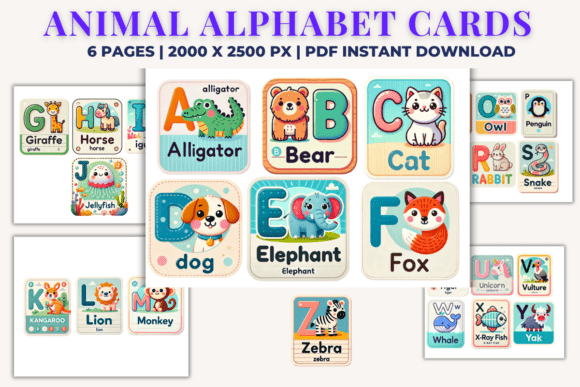
Animal Alphabet Flashcards: Design & Use
In the realm of visual communication, the ability to simplify complex concepts into engaging, digestible imagery is a hallmark of exceptional graphic design. When we examine resources like Animal Alphabet Flashcards, we see more than just educational tools; we observe a masterclass in typography, color theory, and visual hierarchy tailored for young audiences. For designers, marketers, and creators, understanding the principles behind these assets offers valuable insights into crafting compelling brand identities and user experiences that resonate across all age groups.
The Intersection of Playfulness and Professional Design
Effective visual design relies on the seamless integration of form and function. The Animal Alphabet Flashcards exemplify this by combining bold, legible typography with vibrant, cartoon-style illustrations. From a professional perspective, this approach demonstrates how to create a strong visual hierarchy. The large, distinct letters serve as the primary focal point, ensuring immediate recognition, while the accompanying animal illustrations provide context and emotional connection. This balance is crucial in branding, where clarity and memorability often determine success.
When evaluating such creative assets, designers should consider the color palette used. In early education materials, high-contrast colors are not merely aesthetic choices; they are functional necessities that guide the eye and reduce cognitive load. This principle translates directly to UI design and web design, where clear visual cues improve navigation and user engagement. By studying how these flashcards utilize color to differentiate letters and animals, professionals can refine their own approaches to creating intuitive digital interfaces.
Practical Applications Across Creative Industries
The versatility of well-crafted educational graphics extends far beyond the classroom. Here is how the design principles found in Animal Alphabet Flashcards can be applied to various professional contexts:
- Branding and Logo Design: Just as each letter in the flashcards is paired with a unique character, logos benefit from distinctive iconography that reinforces brand identity. Using playful yet structured elements can humanize a brand, making it more approachable.
- Social Media Graphics: In digital marketing, attention spans are short. Assets that combine bold typography with engaging imagery—similar to the flashcard layout—are highly effective for stopping the scroll and driving interaction.
- Editorial and Print Design: For magazines, books, or brochures, these cards offer inspiration for layout grids and image-to-text ratios. They demonstrate how to maintain modern aesthetics while ensuring content remains accessible.
- Packaging Design: Product packaging for children's goods often mimics this style. Understanding the composition helps designers create packages that stand out on shelves while conveying safety and fun.
- Digital Products and Apps: The clean lines and scalable vector nature of such illustrations make them ideal for app icons, onboarding screens, and interactive learning modules within software.
Evaluating Quality and Usability in Design Assets
When selecting or creating assets like these, consistency is key. A cohesive design workflow ensures that every element—from the font choice to the illustration style—aligns with the overall project goals. Designers must ask: Is the typography readable at different sizes? Does the imagery support the message without causing clutter? Are the colors accessible to users with visual impairments?
Scalability is another critical factor. High-quality creative assets must retain their integrity whether printed on standard A4 paper (29.7 x 20 cm) or displayed on a high-resolution mobile screen. The Animal Alphabet Flashcards typically feature vector-based artwork, which allows for infinite scaling without loss of quality—a best practice that should be adopted in all professional presentation materials.
Enhancing User Experience Through Visual Storytelling
Beyond technical specifications, the true value of these designs lies in their storytelling capability. Each card tells a micro-story connecting a letter to an animal, fostering an emotional bond with the learner. In UX design, this concept mirrors the journey of guiding a user through a product interface. By associating abstract functions with familiar, friendly visuals, designers can reduce friction and enhance satisfaction.
For business owners and marketers, leveraging such design trends can significantly boost engagement. Whether launching a new campaign or rebranding an existing product, incorporating elements of playfulness and clarity can differentiate your offering in a crowded market. It is about moving beyond generic templates to create bespoke solutions that reflect a deep understanding of the target audience.
Ultimately, thoughtful design choices transform simple information into memorable experiences. Whether you are developing marketing materials, designing a website, or creating educational content, prioritizing visual impact and usability will yield superior results. By analyzing successful examples like Animal Alphabet Flashcards, designers can unlock new levels of creativity, ensuring their work not only looks good but also communicates effectively and endures over time.